
384 lines
12 KiB
Plaintext
384 lines
12 KiB
Plaintext
Metadata-Version: 2.1
|
||
Name: arabic-reshaper
|
||
Version: 3.0.0
|
||
Summary: Reconstruct Arabic sentences to be used in applications that do not support Arabic
|
||
Home-page: https://github.com/mpcabd/python-arabic-reshaper/
|
||
Download-URL: https://github.com/mpcabd/python-arabic-reshaper/tarball/master
|
||
Author: Abdullah Diab
|
||
Author-email: mpcabd@gmail.com
|
||
Maintainer: Abdullah Diab
|
||
Maintainer-email: mpcabd@gmail.com
|
||
License: MIT
|
||
Keywords: arabic shaping reshaping reshaper
|
||
Platform: ALL
|
||
Classifier: Natural Language :: Arabic
|
||
Classifier: Operating System :: OS Independent
|
||
Classifier: Programming Language :: Python :: 3.6
|
||
Classifier: Programming Language :: Python :: 3.7
|
||
Classifier: Programming Language :: Python :: 3.8
|
||
Classifier: Programming Language :: Python :: 3.9
|
||
Classifier: Programming Language :: Python :: 3.10
|
||
Classifier: Programming Language :: Python :: 3.11
|
||
Classifier: Topic :: Software Development :: Libraries :: Python Modules
|
||
Description-Content-Type: text/markdown
|
||
License-File: LICENSE
|
||
Provides-Extra: with-fonttools
|
||
Requires-Dist: fonttools (>=4.0) ; extra == 'with-fonttools'
|
||
|
||
## Python Arabic Reshaper
|
||
|
||
[](https://app.travis-ci.com/mpcabd/python-arabic-reshaper)
|
||
|
||
Reconstruct Arabic sentences to be used in applications that don't support
|
||
Arabic script.
|
||
|
||
Works with Python 3.x
|
||
|
||
## Description
|
||
|
||
Arabic script is very special with two essential features:
|
||
|
||
1. It is written from right to left.
|
||
2. The characters change shape according to their surrounding characters.
|
||
|
||
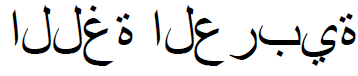
So when you try to print text written in Arabic script in an application
|
||
– or a library – that doesn’t support Arabic you’re pretty likely to end up
|
||
with something that looks like this:
|
||
|
||
|
||
|
||
We have two problems here, first, the characters are in the isolated form,
|
||
which means that every character is rendered regardless of its surroundings,
|
||
and second is that the text is written from left to right.
|
||
|
||
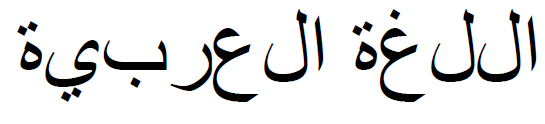
To solve the latter issue all we have to do is to use the
|
||
[Unicode bidirectional algorithm](http://unicode.org/reports/tr9/), which is
|
||
implemented purely in Python in
|
||
[python-bidi](https://github.com/MeirKriheli/python-bidi).
|
||
If you use it you’ll end up with something that looks like this:
|
||
|
||
|
||
|
||
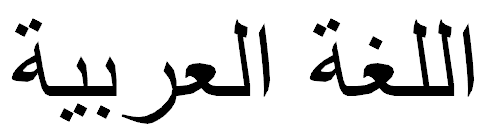
The only issue left to solve is to reshape those characters and replace them
|
||
with their correct shapes according to their surroundings. Using this library
|
||
helps with the reshaping so we can get the proper result like this:
|
||
|
||
|
||
|
||
## Installation
|
||
|
||
pip install --upgrade arabic-reshaper
|
||
|
||
If you're using Anaconda you can use
|
||
|
||
conda install -c mpcabd arabic-reshaper
|
||
|
||
## Usage
|
||
|
||
```python
|
||
import arabic_reshaper
|
||
|
||
text_to_be_reshaped = 'اللغة العربية رائعة'
|
||
reshaped_text = arabic_reshaper.reshape(text_to_be_reshaped)
|
||
```
|
||
|
||
### Example using PIL Image
|
||
|
||
PIL Image does not support reshaping out of the box, so to draw Arabic text on an `Image` instance you would need to reshape
|
||
the text for sure.
|
||
|
||
For this example to work you need to run `pip install --upgrade arabic-reshaper python-bidi pillow`
|
||
|
||
```python
|
||
|
||
import arabic_reshaper
|
||
|
||
text_to_be_reshaped = 'اللغة العربية رائعة'
|
||
reshaped_text = arabic_reshaper.reshape(text_to_be_reshaped)
|
||
|
||
# At this stage the text is reshaped, all letters are in their correct form
|
||
# based on their surroundings, but if you are going to print the text in a
|
||
# left-to-right context, which usually happens in libraries/apps that do not
|
||
# support Arabic and/or right-to-left text rendering, then you need to use
|
||
# get_display from python-bidi.
|
||
# Note that this is optional and depends on your usage of the reshaped text.
|
||
|
||
from bidi.algorithm import get_display
|
||
bidi_text = get_display(reshaped_text)
|
||
|
||
# At this stage the text in bidi_text can be easily rendered in any library
|
||
# that doesn't support Arabic and/or right-to-left, so use it as you'd use
|
||
# any other string. For example if you're using PIL.ImageDraw.text to draw
|
||
# text over an image you'd just use it like this...
|
||
|
||
from PIL import Image, ImageDraw, ImageFont
|
||
|
||
# We load Arial since it's a well known font that supports Arabic Unicode
|
||
font = ImageFont.truetype('Arial', 40)
|
||
|
||
image = Image.new('RGBA', (800, 600), (255,255,255,0))
|
||
image_draw = ImageDraw.Draw(image)
|
||
image_draw.text((10,10), bidi_text, fill=(255,255,255,128), font=font)
|
||
|
||
# Now the text is rendered properly on the image, you can save it to a file or just call `show` to see it working
|
||
image.show()
|
||
|
||
# For more details on PIL.Image and PIL.ImageDraw check the documentation
|
||
# See http://pillow.readthedocs.io/en/5.1.x/reference/ImageDraw.html?#PIL.ImageDraw.PIL.ImageDraw.Draw.text
|
||
|
||
```
|
||
|
||
## Settings
|
||
|
||
You can configure the reshaper to your preferences, it has the following
|
||
settings defined:
|
||
|
||
* `language` (Default: `'Arabic'`): Ignored, the reshaper works with Arabic,
|
||
Farsi, and Urdu, and most probably all other languages that use Arabic script.
|
||
* `support_ligatures` (Default: `True`): When this is set to `False`, the
|
||
reshaper will not replace any ligatures, otherwise it will replace enabled
|
||
ligatures.
|
||
* `delete_harakat` (Default: `True`): When this is set to `False` the reshaper
|
||
will not delete the harakat from the text, this will result in them showing up
|
||
in the reshaped text, you should enable this option if you are going to pass
|
||
the reshaped text to `bidi.algorithm.get_display` because it will reverse the
|
||
text and you'd end up with harakat applied to the next letter instead of the
|
||
previous letter.
|
||
* `delete_tatweel` (Default `False`): When this is set to `True` the reshaper
|
||
will delete the Tatweel character (U+0640) from the text before reshaping, this
|
||
can be useful when you want to support ligatures and don't care about Tatweel
|
||
getting deleted.
|
||
* `shift_harakat_position` (Default `False`): Whether to shift the Harakat
|
||
(Tashkeel) one position so they appear correctly when string is reversed, this
|
||
might solve the problem of Tashkeel in some systems, although for `PIL.Image`
|
||
for example, this is not needed.
|
||
* `support_zwj` (Default `True`): Whether to support ZWJ (`U+200D`) or not.
|
||
* `use_unshaped_instead_of_isolated` (Default `False`): Use unshaped form
|
||
instead of isolated form, useful in some fonts that are missing the isolated
|
||
form of letters.
|
||
|
||
Besides the settings above, you can enable/disable supported ligatures. For a
|
||
full list of supported ligatures and their default status check the file
|
||
[default-config.ini](https://github.com/mpcabd/python-arabic-reshaper/blob/32f7497aa24a68ab880d0248b21715928f0ce212/arabic_reshaper/default-config.ini).
|
||
|
||
There are multiple ways that you can configure the reshaper in, choose the one
|
||
that suits your deployment:
|
||
|
||
### Via ArabicReshaper instance `configuration`
|
||
|
||
Instead of directly using `arabic_reshaper.reshape` function, define an
|
||
instance of `arabic_reshaper.ArabicReshaper`, and pass your config dictionary
|
||
to its constructor's `configuration` parameter like this:
|
||
|
||
```python
|
||
from arabic_reshaper import ArabicReshaper
|
||
configuration = {
|
||
'delete_harakat': False,
|
||
'support_ligatures': True,
|
||
'RIAL SIGN': True, # Replace ر ي ا ل with ﷼
|
||
}
|
||
reshaper = ArabicReshaper(configuration=configuration)
|
||
text_to_be_reshaped = 'سعر المنتج ١٥٠ ر' + 'يال' # had to split the string for display
|
||
reshaped_text = reshaper.reshape(text_to_be_reshaped)
|
||
```
|
||
|
||
### Via ArabicReshaper instance `configuration_file`
|
||
|
||
You can separte the configuration from your code, by copying the file
|
||
[default-config.ini](default-config.ini) and change its settings,
|
||
then save it somewhere in your project, and then you can tell the reshaper
|
||
to use your new config file, just pass the path to your config file to its
|
||
constructor's `configuration_file` parameter like this:
|
||
|
||
```python
|
||
from arabic_reshaper import ArabicReshaper
|
||
reshaper = ArabicReshaper(configuration_file='/path/to/your/config.ini')
|
||
text_to_be_reshaped = 'سعر المنتج ١٥٠ ر' + 'يال' # had to split the string for display
|
||
reshaped_text = reshaper.reshape(text_to_be_reshaped)
|
||
```
|
||
|
||
Where in you `config.ini` you can have something like this:
|
||
|
||
```
|
||
[ArabicReshaper]
|
||
delete_harakat = no
|
||
support_ligatures = yes
|
||
RIAL SIGN = yes
|
||
```
|
||
|
||
### Via `PYTHON_ARABIC_RESHAPER_CONFIGURATION_FILE` environment variable
|
||
|
||
Instead of having to rewrite your old code to configure it like above, you can
|
||
define an environment variable with the name
|
||
`PYTHON_ARABIC_RESHAPER_CONFIGURATION_FILE` and in its value put the full path
|
||
to the configuration file. This way the reshape function will pick it
|
||
automatically, and you won't have to change your old code.
|
||
|
||
## Settings based on a TrueType® font
|
||
|
||
If you intend to render the text in a TrueType® font, you can tell the library
|
||
to generate its configuration by reading the font file to figure out what's
|
||
supported in the font and what's not.
|
||
|
||
To use this feature you need to install the library with an extra option
|
||
(not necessary when you install it with conda):
|
||
|
||
pip install --upgrade arabic-reshaper[with-fonttools]
|
||
|
||
Then you can use the reshaper like this:
|
||
|
||
```python
|
||
import arabic_reshaper
|
||
|
||
reshaper = arabic_reshaper.ArabicReshaper(
|
||
arabic_reshaper.config_for_true_type_font(
|
||
'/path/to/true-type-font.ttf',
|
||
arabic_reshaper.ENABLE_ALL_LIGATURES
|
||
)
|
||
)
|
||
```
|
||
|
||
This will parse the font file, and figure out what ligatures it supports and enable them,
|
||
as well as whether it has isolated forms or `use_unshaped_instead_of_isolated` should be
|
||
enabled.
|
||
|
||
The second parameter to `config_for_true_type_font` can be one of
|
||
|
||
- `ENABLE_NO_LIGATURES`
|
||
- `ENABLE_SENTENCES_LIGATURES`
|
||
- `ENABLE_WORDS_LIGATURES`
|
||
- `ENABLE_LETTERS_LIGATURES`
|
||
- `ENABLE_ALL_LIGATURES` (default)
|
||
|
||
which controls what ligatures to look for, depending on your usage,
|
||
see [default-config.ini](default-config.ini) to know what ligatures are there.
|
||
|
||
## Tashkeel/Harakat issue
|
||
|
||
[Harakat or Tashkeel](http://en.wikipedia.org/wiki/Arabic_diacritics#Tashkil_.28marks_used_as_phonetic_guides.29)
|
||
might not show up properly in their correct place, depending on the application
|
||
or the library that is doing the rendering for you, so you might want to enable
|
||
the `shift_harakat_position` option if you face this problem.
|
||
|
||
## License
|
||
|
||
This work is licensed under
|
||
[MIT License](https://opensource.org/licenses/MIT).
|
||
|
||
## Demo
|
||
|
||
Online Arabic Reshaper: http://pydj.mpcabd.xyz/arabic-reshaper/
|
||
|
||
## Download
|
||
|
||
https://github.com/mpcabd/python-arabic-reshaper/tarball/master
|
||
|
||
## Version History
|
||
|
||
### 3.0.0
|
||
* Stop supporting Python 2.7
|
||
* Remove dependency on `future`. See #88.
|
||
|
||
### 2.1.4
|
||
|
||
* Fix unparseable version bound for `fonttools` under Python 2
|
||
|
||
### 2.1.3
|
||
|
||
* Remove dependency on `__version__.py` and `default-config.ini` files, as they were causing problems for people who package their apps using pyinstaller or buildozer.
|
||
|
||
### 2.1.1
|
||
|
||
* Fix a warning. See #57. Thanks @fbernhart
|
||
|
||
### 2.1.0
|
||
|
||
* Added support for settings based on a TrueType® font
|
||
|
||
### 2.0.14
|
||
|
||
* New option `use_unshaped_instead_of_isolated` to get around some fonts missing the isolated form for letters.
|
||
|
||
### 2.0.13
|
||
|
||
**BROKEN** please make sure not to use this version.
|
||
|
||
### 2.0.12
|
||
|
||
* Updated letters and ligatures
|
||
* New option `shift_harakat_position` to try to get around the Tashkeel problem
|
||
|
||
### 2.0.11
|
||
|
||
* Proper support for ZWJ
|
||
|
||
### 2.0.10
|
||
|
||
* Fix Shadda ligatures
|
||
|
||
### 2.0.9
|
||
|
||
* Added support for ZWJ (Zero-width Joiner) (U+200D)
|
||
|
||
### 2.0.8
|
||
|
||
* Added `delete_tatweel`
|
||
* Added more test cases
|
||
|
||
### 2.0.7
|
||
|
||
* Fix tests for Python 2.7
|
||
|
||
### 2.0.6
|
||
|
||
* Fixed a bug with Harakat breaking the reshaping
|
||
* Wrote two small unit tests, more to come
|
||
* Moved letters and ligatures to separate files for readability/maintainability
|
||
* Moved package to its own folder for readability/maintainability
|
||
|
||
### 2.0.5
|
||
|
||
Fix error message formatting
|
||
|
||
### 2.0.4
|
||
|
||
Fix error message formatting
|
||
|
||
### 2.0.3
|
||
|
||
Use `Exception` instead of `Error`.
|
||
|
||
### 2.0.2
|
||
|
||
Use `pkg_resources.resource_filename` instead of depending on `__file__` to access `default-config.ini`.
|
||
|
||
### 2.0.1
|
||
|
||
Include default-config.ini in setup.py
|
||
|
||
### 2.0.0
|
||
|
||
* Totally rewrote the code;
|
||
* Faster and better performance;
|
||
* Added the ability to configure and customise the reshaper.
|
||
|
||
### 1.0.1
|
||
|
||
* New glyphs for Farsi;
|
||
* Added setup.py;
|
||
* Bugfixes.
|
||
|
||
### 1.0
|
||
|
||
* Ported [Better Arabic Reshaper](https://github.com/agawish/Better-Arabic-Reshaper/)
|
||
to Python.
|
||
|
||
## Contact
|
||
|
||
Abdullah Diab (mpcabd)
|
||
Email: mpcabd@gmail.com
|
||
Blog: http://mpcabd.xyz
|
||
|
||
For more info visit my blog
|
||
[post here](http://mpcabd.xyz/python-arabic-text-reshaper/)
|